Location : Home > News >
During the next five-year plan (2026 – 2030), China wants to significantly reduce energy consumption and CO2 emissions
( Date: 2025/3/10 9:40:40 )
The ecological footprint of building materials is also to be controlled / Forum at Xiamen Stone Fair。
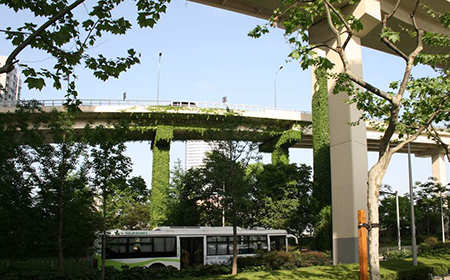
China wants to significantly reduce its economy’s CO2 emissions in the coming years. To this end, the 15th five-year plan, which will apply from 2026 to 2030, will stipulate precise measurement methods for companies’ greenhouse gas emissions and for the carbon footprint of products. There is talk of “double control of carbon emissions”.
One of the time-related goals is that emissions exceed the maximum before 2030 and then only decrease after that.
This is set out in a circular published by government agencies. What is remarkable about this is the timing: it happened at the beginning of August 2024, a year and a half before the People’s Congress will make the decisions for the coming planning period. The publication came from the General Office of the State Council.
This also shows one of the methods by which politics is made at the highest level in China: the government announces early on what it expects from the economy and then generously overlooks deviations or excuses until the changes come into force. We described a while ago how politicians had brought the idea of “green quarrying” to the people with a company competition and best practice examples (see link below).
From the time it came into force, however, the state has acted with iron determination and has not shied away from closing companies.
One of the documents from the circular mentioned above gives details of the upcoming objectives: the new standards are to apply to key industries such as “building materials, the electricity industry, the steel industry and others”.
There are also to be new regulations for the national trading of emissions certificates.
It seems that China is taking the same path in the fight against climate change as the West: in recent years, building materials have taken center stage there. Whereas previously the focus was primarily on energy consumption when operating a building and counteracted this with thermal insulation, for example, the focus is now more on so-called grey energy, i.e. the energy that has to be used to produce the building materials.
This significantly improves the market opportunities for natural stone: simply because it is there by nature. Other strengths are that it has a very long service life and can be reused practically indefinitely.
In many countries in Europe, there are therefore initiatives that are rediscovering the old solid construction with natural stone. Companies and universities are developing ideas for the architecture of such construction methods and for innovative constructions.
Back to China. In a publication just a few days after the first circular, the topic was addressed again. It states that by 2030, “remarkable results” are to be achieved on the path of the “green transition” in “all areas of economic and social development”.
At the same time, it is promised that the government will also provide citizens with better living conditions by 2030 – this is where the term “Beautiful China” appears in the circulars.
It will be remembered that just a few years ago, major cities like Beijing suffered from unbearable air pollution from traffic, transport, heating and energy production at certain times of the year.
“Beautiful China” is a big promise, and the party and the authorities know that the goal is ambitious. The concerns are immediately provided, here from the National Development and Reform Commission (NDRC): “China still faces difficulties and challenges in green transition, with the energy structure remaining biased toward coal and the proportion of fossil energy and traditional industries remaining high in the country.”
In passing, the western industrialized countries and the rest of the world are blamed if things in China are progressing more slowly than planned: “In addition, the global green transition is facing setbacks, environmental and climate issues are increasingly being politicized, and green trade barriers are escalating.”
From: stone-ideas
Latest Resources
- Neolith Launches Four New Sintered Stone...
- Brazilian Stone Producers Amp Up for Xia...
- Builders identify key long-term forces s...
- Caesarstone expands porcelain offering
- Wonder Porcelain to debut Ivorynn Stone ...
- Nichiha USA signals a new era of residen...
- Grip Crystal Bond Vinyl Ester Adhesives ...
- Vadara Quartz Recognized for Design Exce...
- Construction materials prices surge in J...
- Crossville to unveil spa-inspired exhibi...
Previous Fair